
Description
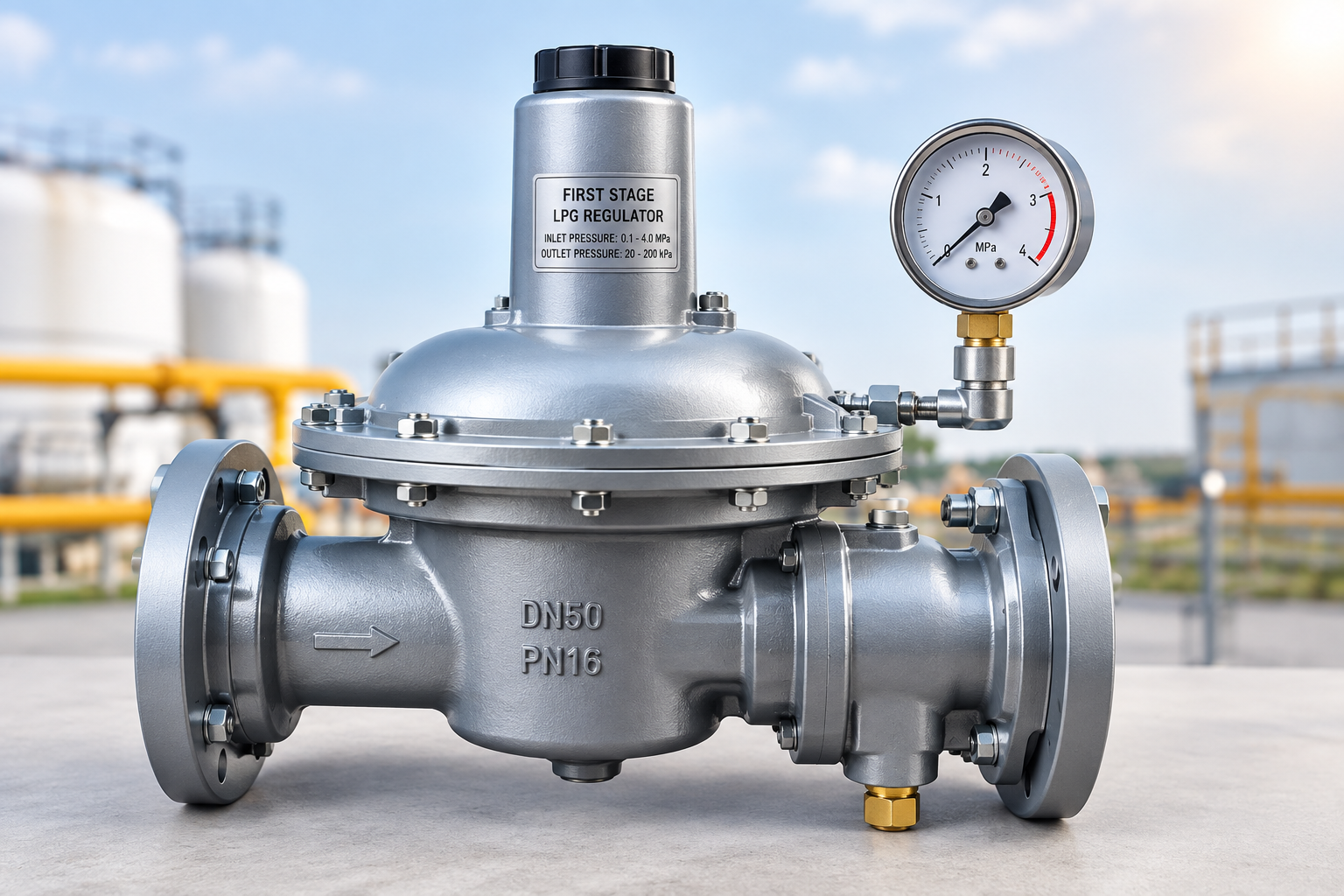
A First Stage LPG Regulator is an essential component of an LPG gas distribution system, designed to reduce the pressure of LPG supplied from cylinders or an approved storage source to a lower intermediate pressure suitable for the next stage of regulation. It helps maintain controlled gas pressure and supports the safe, efficient operation of centralized LPG reticulation systems.
RN Group offers First Stage LPG Regulator solutions for residential buildings, commercial kitchens, restaurants, hotels, industrial facilities, and institutional projects. These regulators are used in LPG installations where the gas supply requires staged pressure reduction before reaching the final distribution or appliance supply pressure.
A properly selected LPG First Stage Pressure Regulator works with compatible manifolds, pipelines, valves, gauges, and downstream regulators to support stable gas distribution. The regulator must be selected according to the LPG system design, inlet pressure, required outlet pressure, gas flow demand, connection type, and applicable safety requirements.
What Is a First Stage LPG Regulator?
A First Stage LPG Regulator is a pressure-control device installed near the LPG source or cylinder bank in systems designed for two-stage pressure regulation. Its primary function is to reduce the relatively high pressure from the LPG supply to a specified intermediate pressure.
In a typical two-stage LPG system, the first-stage regulator reduces the source pressure, while a second-stage regulator further reduces the pressure to the level required by the downstream gas distribution system or appliances.
The exact arrangement depends on the design of the LPG installation. Not every LPG system uses two-stage regulation, so regulator selection should follow the project’s engineering requirements.
How Does a First Stage LPG Regulator Work?
The regulator controls downstream gas pressure through an internal pressure-sensing and regulating mechanism.
-
LPG Inlet: Gas enters the regulator from the connected cylinder bank or approved LPG supply source.
-
Pressure Reduction: The regulator reduces the incoming gas pressure to its specified outlet-pressure range.
-
Controlled Gas Supply: The regulated gas passes into the downstream pipeline or intermediate-pressure distribution section.
-
Second-Stage Regulation: Where a two-stage arrangement is used, a compatible second-stage regulator reduces the pressure further to the required operating level.
-
System Integration: Valves, gauges, protective devices, and other components are incorporated as required by the LPG system design.
Correct installation, pressure adjustment where applicable, and commissioning by qualified personnel are essential for safe operation.
Key Features of a First Stage LPG Regulator
-
First-Stage Pressure Reduction: Reduces LPG source pressure to a specified intermediate pressure.
-
Controlled Gas Delivery: Supports controlled gas flow within the regulator’s rated operating range.
-
LPG System Compatibility: Designed for use in suitable LPG cylinder-bank and reticulation installations.
-
Two-Stage Regulation Support: Can work with a compatible second-stage regulator where required.
-
Multiple Application Options: Available configurations may suit different gas demand and installation requirements.
-
System Integration: Can be incorporated with compatible manifolds, pipelines, isolation valves, and monitoring equipment.
-
Project-Based Selection: Selection can be based on inlet pressure, outlet pressure, flow capacity, and connection requirements.
Actual features vary by manufacturer and model. Confirm the product datasheet before purchase.
Advantages of a First Stage LPG Regulator
1. Reduces High Inlet Pressure
The regulator reduces LPG supply pressure to a specified intermediate level suitable for the next part of the system.
2. Supports Two-Stage Pressure Regulation
In installations designed for two-stage regulation, it works with a second-stage regulator to achieve the required downstream pressure.
3. Helps Maintain Controlled Gas Supply
When correctly selected and operated within its rated range, the regulator helps control outlet pressure as gas demand changes.
4. Suitable for Centralized LPG Systems
It can be used in appropriately engineered LPG systems serving multiple consumption points.
5. Supports Organized System Design
The regulator provides a defined pressure-reduction stage, helping engineers plan the downstream pipeline and regulation equipment.
6. Integrates with LPG Equipment
It can form part of a complete installation that includes cylinder manifolds, gas pipelines, valves, gauges, and safety equipment.
Limitations and Important Considerations
-
Correct Sizing Is Essential: The regulator must match the system’s gas flow demand and operating pressure.
-
Not Suitable for Every Installation: Inlet pressure, LPG type, outlet pressure, and regulator design must be compatible with the application.
-
May Require a Second-Stage Regulator: The first-stage regulator alone may not reduce pressure to the final level required by appliances.
-
Requires Professional Installation: Incorrect connections or adjustments can cause dangerous operating conditions.
-
Regular Inspection Is Necessary: The regulator and connected components should be inspected according to the manufacturer’s instructions and applicable regulations.
-
Performance Has Defined Limits: A regulator cannot provide unlimited gas flow or maintain pressure outside its rated operating range.
A First Stage LPG Regulator is not a substitute for the complete safety system. Appropriate overpressure protection, isolation, ventilation, leak testing, and other protective measures must be provided as required by the installation design and applicable codes.
Applications of a First Stage LPG Regulator
RN Group’s First Stage LPG Regulator solutions may be suitable for properly designed LPG installations in the following settings:
-
Residential Buildings: Centralized LPG reticulation systems for apartments and housing complexes.
-
Hotels and Restaurants: LPG supply systems serving commercial kitchens and food preparation areas.
-
Commercial Facilities: Buildings and businesses using centralized LPG distribution.
-
Industrial Facilities: Approved industrial processes requiring regulated LPG supply.
-
Institutional Projects: Suitable institutional facilities requiring centralized gas distribution.
Final suitability depends on the equipment specification, system design, local regulations, and the intended application.
Why Choose RN Group for First Stage LPG Regulators?
RN Group supports LPG reticulation projects with equipment and technical solutions selected according to project-specific requirements. A First Stage LPG Regulator can be integrated with compatible LPG manifolds, gas pipelines, second-stage regulators, valves, and related components to form a coordinated gas distribution system.
Our focus is on suitable equipment selection, system compatibility, installation planning, and dependable technical support. Before ordering, confirm the required inlet and outlet pressure, rated gas capacity, connection size, LPG compatibility, and manufacturer specifications.
For product information or project inquiries, contact RN Group to discuss your LPG regulator requirements.
Frequently Asked Questions (FAQ)
What is a First Stage LPG Regulator?
It is a pressure regulator that reduces pressure from an LPG supply source to a specified intermediate pressure in systems using staged pressure regulation.
What is the difference between a first-stage and second-stage LPG regulator?
A first-stage regulator reduces the source pressure to an intermediate level. A second-stage regulator reduces that pressure further to the required downstream operating pressure, where a two-stage system is used.
Where is a First Stage LPG Regulator installed?
It is generally installed near the LPG source or cylinder bank in systems designed for first-stage pressure reduction. The exact location depends on the system design and applicable requirements.
Can a First Stage LPG Regulator supply multiple appliances?
It can serve a distribution system supplying multiple appliances when the complete system—including the regulator, piping, and downstream equipment—is correctly designed and sized.
Does a First Stage LPG Regulator require maintenance?
Yes. Inspection and maintenance should follow the manufacturer’s instructions and applicable regulations. Damaged, leaking, or improperly operating regulators require attention from qualified personnel.
How do I choose the correct First Stage LPG Regulator?
Check the required inlet pressure, outlet pressure, gas flow capacity, LPG compatibility, connection type, installation environment, and applicable certifications. A qualified LPG system designer or installer should verify the selection.

Reviews
There are no reviews yet.