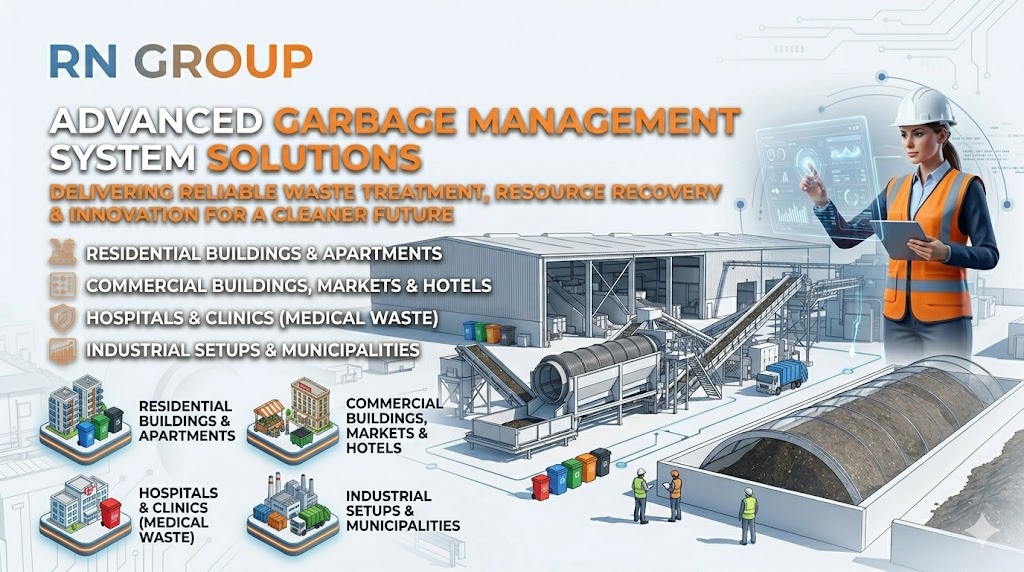
Garbage Management Plant
Garbage Management Plant
𝐑𝐍 𝐆𝐑𝐎𝐔𝐏 𝐆𝐚𝐫𝐛𝐚𝐠𝐞 𝐌𝐚𝐧𝐚𝐠𝐞𝐦𝐞𝐧𝐭 𝐏𝐥𝐚𝐧𝐭
𝐎𝐮𝐫 𝐒𝐞𝐫𝐯𝐢𝐜𝐞𝐬
> Residential Buildings & Apartments
> Commercial Buildings, Markets & Hotels
> Hospitals & Clinics (Medical Waste)
> Industrial Setups & Municipalities
𝐂𝐨𝐦𝐩𝐨𝐧𝐞𝐧𝐭𝐬 & 𝐏𝐨𝐭𝐞𝐧𝐭𝐢𝐚𝐥 𝐂𝐨𝐮𝐧𝐭𝐫𝐲 𝐨𝐟 𝐎𝐫𝐢𝐠𝐢𝐧
𝐎𝐫𝐠𝐚𝐧𝐢𝐜 𝐖𝐚𝐬𝐭𝐞 𝐂𝐨𝐦𝐩𝐨𝐬𝐭𝐞𝐫: Made in Korea / India
𝐈𝐧𝐜𝐢𝐧𝐞𝐫𝐚𝐭𝐨𝐫: Made in UK / China
𝐖𝐚𝐬𝐭𝐞 𝐒𝐡𝐫𝐞𝐝𝐝𝐞𝐫 𝐌𝐚𝐜𝐡𝐢𝐧𝐞: Made in Germany / Taiwan
𝐎𝐝𝐨𝐫 𝐂𝐨𝐧𝐭𝐫𝐨𝐥 𝐒𝐲𝐬𝐭𝐞𝐦: Made in Japan / Malaysia
𝐖𝐡𝐚𝐭 𝐢𝐬 𝐚 𝐆𝐚𝐫𝐛𝐚𝐠𝐞 𝐌𝐚𝐧𝐚𝐠𝐞𝐦𝐞𝐧𝐭 𝐏𝐥𝐚𝐧𝐭?
> A garbage management plant is a modern, scientific, automated, and eco-friendly system designed for the collection, segregation, and treatment of daily waste from households, hospitals, or factories. Through this process, biodegradable waste is converted into organic fertilizer, while non-biodegradable or hazardous waste is safely and securely destroyed.
𝐊𝐞𝐲 𝐅𝐞𝐚𝐭𝐮𝐫𝐞𝐬 & 𝐁𝐞𝐧𝐞𝐟𝐢𝐭𝐬
𝐏𝐫𝐞𝐯𝐞𝐧𝐭𝐢𝐨𝐧 𝐨𝐟 𝐄𝐧𝐯𝐢𝐫𝐨𝐧𝐦𝐞𝐧𝐭𝐚𝐥 𝐏𝐨𝐥𝐥𝐮𝐭𝐢𝐨𝐧: Prevents the spread of foul odors, bacteria, and diseases by hygienically processing waste in a designated facility rather than dumping it indiscriminately.
𝐎𝐫𝐠𝐚𝐧𝐢𝐜 𝐅𝐞𝐫𝐭𝐢𝐥𝐢𝐳𝐞𝐫 𝐏𝐫𝐨𝐝𝐮𝐜𝐭𝐢𝐨𝐧: Utilizes advanced composter machines to transform biodegradable kitchen and food waste into high-quality organic fertilizer for plants within just a few hours.
𝐃𝐞𝐬𝐭𝐫𝐮𝐜𝐭𝐢𝐨𝐧 𝐨𝐟 𝐌𝐞𝐝𝐢𝐜𝐚𝐥 & 𝐇𝐚𝐳𝐚𝐫𝐝𝐨𝐮𝐬 𝐖𝐚𝐬𝐭𝐞: Safely and smokelessly burns dangerous hospital waste and harmful factory chemicals to ashes using an advanced incinerator.
𝐒𝐩𝐚𝐜𝐞 𝐒𝐚𝐯𝐢𝐧𝐠 & 𝐂𝐥𝐞𝐚𝐧𝐥𝐢𝐧𝐞𝐬𝐬: Eliminates the need for massive waste accumulation areas. Because the entire process is enclosed and automated, the building environment remains completely clean and germ-free.
𝐂𝐨𝐦𝐦𝐨𝐧 𝐏𝐫𝐨𝐛𝐥𝐞𝐦𝐬 & 𝐑𝐢𝐬𝐤𝐬 𝐢𝐧 𝐂𝐨𝐧𝐯𝐞𝐧𝐭𝐢𝐨𝐧𝐚𝐥 𝐖𝐚𝐬𝐭𝐞 𝐌𝐚𝐧𝐚𝐠𝐞𝐦𝐞𝐧𝐭
> Failing to properly segregate biodegradable (wet) and non-biodegradable (dry) waste prior to disposal, preventing the plant's machinery from functioning properly.
> Installing lower-capacity machines without accurately calculating the total waste volume generated by the building, leading to waste pile-ups and severe foul odors.
> Intense bad odors spreading into the surrounding environment due to the absence of proper ventilation and bio-filters (odor filters) within the plant.
> Severe air pollution and toxic smoke caused by failing to maintain the correct high temperatures in the incinerator or using substandard, undersized chimneys.
> Failing to use skilled operators to run the machinery and neglecting regular maintenance, such as cleaning the blades, heaters, and filters.
Book Schedule
𝐎𝐮𝐫 𝐒𝐞𝐫𝐯𝐢𝐜𝐞𝐬
> Residential Buildings & Apartments
> Commercial Buildings, Markets & Hotels
> Hospitals & Clinics (Medical Waste)
> Industrial Setups & Municipalities
𝐂𝐨𝐦𝐩𝐨𝐧𝐞𝐧𝐭𝐬 & 𝐏𝐨𝐭𝐞𝐧𝐭𝐢𝐚𝐥 𝐂𝐨𝐮𝐧𝐭𝐫𝐲 𝐨𝐟 𝐎𝐫𝐢𝐠𝐢𝐧
𝐎𝐫𝐠𝐚𝐧𝐢𝐜 𝐖𝐚𝐬𝐭𝐞 𝐂𝐨𝐦𝐩𝐨𝐬𝐭𝐞𝐫: Made in Korea / India
𝐈𝐧𝐜𝐢𝐧𝐞𝐫𝐚𝐭𝐨𝐫: Made in UK / China
𝐖𝐚𝐬𝐭𝐞 𝐒𝐡𝐫𝐞𝐝𝐝𝐞𝐫 𝐌𝐚𝐜𝐡𝐢𝐧𝐞: Made in Germany / Taiwan
𝐎𝐝𝐨𝐫 𝐂𝐨𝐧𝐭𝐫𝐨𝐥 𝐒𝐲𝐬𝐭𝐞𝐦: Made in Japan / Malaysia
𝐖𝐡𝐚𝐭 𝐢𝐬 𝐚 𝐆𝐚𝐫𝐛𝐚𝐠𝐞 𝐌𝐚𝐧𝐚𝐠𝐞𝐦𝐞𝐧𝐭 𝐏𝐥𝐚𝐧𝐭?
> A garbage management plant is a modern, scientific, automated, and eco-friendly system designed for the collection, segregation, and treatment of daily waste from households, hospitals, or factories. Through this process, biodegradable waste is converted into organic fertilizer, while non-biodegradable or hazardous waste is safely and securely destroyed.
𝐊𝐞𝐲 𝐅𝐞𝐚𝐭𝐮𝐫𝐞𝐬 & 𝐁𝐞𝐧𝐞𝐟𝐢𝐭𝐬
𝐏𝐫𝐞𝐯𝐞𝐧𝐭𝐢𝐨𝐧 𝐨𝐟 𝐄𝐧𝐯𝐢𝐫𝐨𝐧𝐦𝐞𝐧𝐭𝐚𝐥 𝐏𝐨𝐥𝐥𝐮𝐭𝐢𝐨𝐧: Prevents the spread of foul odors, bacteria, and diseases by hygienically processing waste in a designated facility rather than dumping it indiscriminately.
𝐎𝐫𝐠𝐚𝐧𝐢𝐜 𝐅𝐞𝐫𝐭𝐢𝐥𝐢𝐳𝐞𝐫 𝐏𝐫𝐨𝐝𝐮𝐜𝐭𝐢𝐨𝐧: Utilizes advanced composter machines to transform biodegradable kitchen and food waste into high-quality organic fertilizer for plants within just a few hours.
𝐃𝐞𝐬𝐭𝐫𝐮𝐜𝐭𝐢𝐨𝐧 𝐨𝐟 𝐌𝐞𝐝𝐢𝐜𝐚𝐥 & 𝐇𝐚𝐳𝐚𝐫𝐝𝐨𝐮𝐬 𝐖𝐚𝐬𝐭𝐞: Safely and smokelessly burns dangerous hospital waste and harmful factory chemicals to ashes using an advanced incinerator.
𝐒𝐩𝐚𝐜𝐞 𝐒𝐚𝐯𝐢𝐧𝐠 & 𝐂𝐥𝐞𝐚𝐧𝐥𝐢𝐧𝐞𝐬𝐬: Eliminates the need for massive waste accumulation areas. Because the entire process is enclosed and automated, the building environment remains completely clean and germ-free.
𝐂𝐨𝐦𝐦𝐨𝐧 𝐏𝐫𝐨𝐛𝐥𝐞𝐦𝐬 & 𝐑𝐢𝐬𝐤𝐬 𝐢𝐧 𝐂𝐨𝐧𝐯𝐞𝐧𝐭𝐢𝐨𝐧𝐚𝐥 𝐖𝐚𝐬𝐭𝐞 𝐌𝐚𝐧𝐚𝐠𝐞𝐦𝐞𝐧𝐭
> Failing to properly segregate biodegradable (wet) and non-biodegradable (dry) waste prior to disposal, preventing the plant's machinery from functioning properly.
> Installing lower-capacity machines without accurately calculating the total waste volume generated by the building, leading to waste pile-ups and severe foul odors.
> Intense bad odors spreading into the surrounding environment due to the absence of proper ventilation and bio-filters (odor filters) within the plant.
> Severe air pollution and toxic smoke caused by failing to maintain the correct high temperatures in the incinerator or using substandard, undersized chimneys.
> Failing to use skilled operators to run the machinery and neglecting regular maintenance, such as cleaning the blades, heaters, and filters.